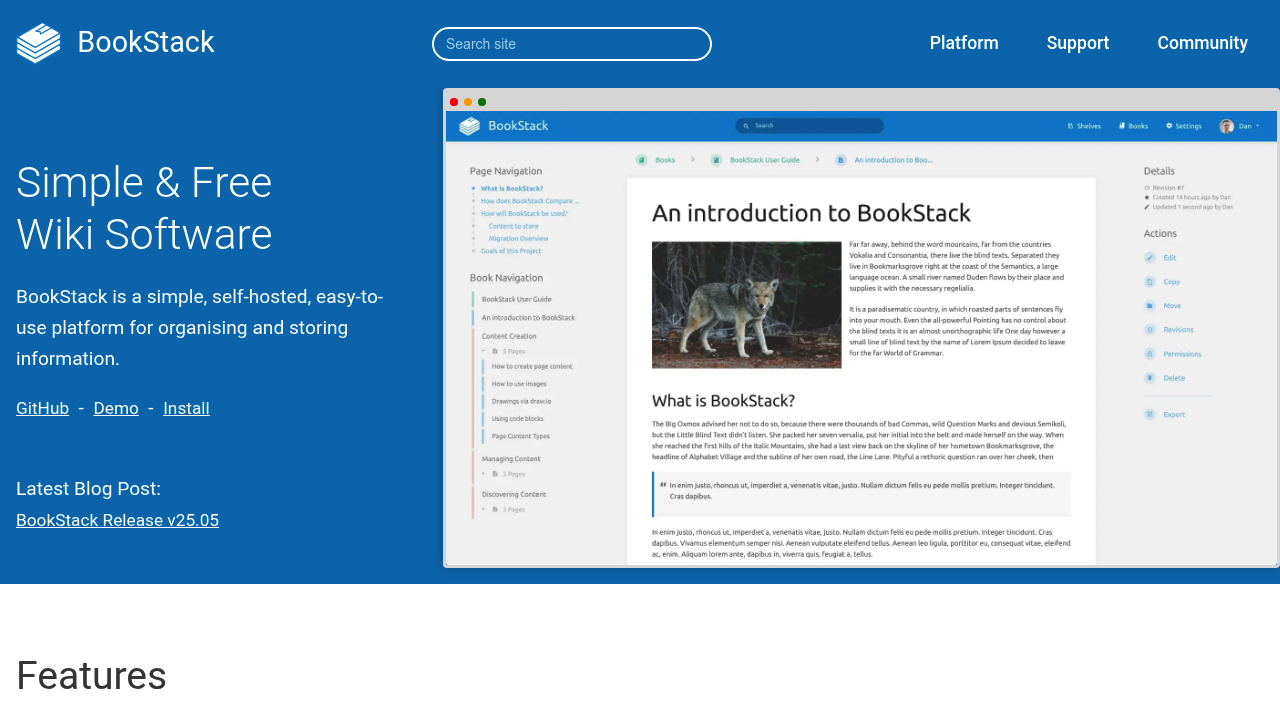
BookStack: A Comprehensive Free Alternative to Confluence
Introduction
BookStack stands out as a powerful free alternative to Atlassian Confluence, offering teams and individuals a robust platform for documentation, knowledge management, and collaborative content creation. While Confluence has dominated the enterprise wiki space for years, BookStack provides a compelling open-source solution that addresses many of the same needs without the licensing costs and complexity.
What is BookStack?
BookStack is designed to streamline documentation workflows and knowledge sharing within organizations. Unlike Confluence's complex licensing structure and resource-heavy requirements, BookStack offers a more accessible approach to team collaboration and information management.
Key Features and Capabilities
Core Functionality
BookStack delivers essential wiki and documentation features that make it a viable Confluence replacement:
- Free & Open Source (MIT License): Essential for modern documentation workflows
- Simple WYSIWYG editor: Essential for modern documentation workflows
- Built-in diagrams.net integration: Essential for modern documentation workflows
- Books, chapters, pages organization: Essential for modern documentation workflows
- Multi-language support: Essential for modern documentation workflows
- Role-based permissions: Essential for modern documentation workflows
- Search functionality: Essential for modern documentation workflows
- Markdown editor option: Essential for modern documentation workflows
User Experience and Interface
The user interface of BookStack prioritizes simplicity and productivity. Users can quickly create, edit, and organize content without the steep learning curve often associated with enterprise software. The platform supports various content types and provides intuitive navigation that helps teams find information efficiently.
Collaboration and Sharing
Team collaboration is at the heart of BookStack's design. Multiple users can work on documents, share knowledge, and maintain up-to-date information repositories. The platform includes features for commenting, version tracking, and access control to ensure secure and organized collaboration.
How BookStack Compares to Confluence
Cost Advantages
One of the most significant advantages of BookStack over Confluence is cost. While Confluence requires expensive licenses that scale with user count, BookStack offers free access to its core features. This makes it particularly attractive for startups, small teams, and organizations looking to reduce software expenses.
Performance and Resource Requirements
BookStack typically requires fewer system resources compared to Confluence's Java-based architecture. This translates to faster page load times, reduced server requirements, and lower infrastructure costs for self-hosted deployments.
Ease of Use
While Confluence offers extensive features, it often comes with complexity that can overwhelm users. BookStack focuses on essential functionality with an intuitive interface that reduces the learning curve for new users.
Use Cases and Applications
Documentation Management
BookStack excels at creating and maintaining technical documentation, user manuals, and process documentation. Teams can organize information hierarchically and create cross-references that help users navigate complex information structures.
Knowledge Base Creation
Organizations can use BookStack to build comprehensive knowledge bases that serve both internal teams and external customers. The search functionality and organization features make it easy for users to find relevant information quickly.
Project Collaboration
Development teams, marketing departments, and other collaborative groups can use BookStack to share project information, track progress, and maintain team communication. The platform supports various content types that accommodate different workflow requirements.
Meeting Notes and Documentation
Teams can use BookStack to capture meeting notes, decisions, and action items. The linking capabilities help connect related discussions and maintain historical context for project decisions.
Advantages of Choosing BookStack
- Completely free and open source: Provides significant value for teams seeking Confluence alternatives
- Lightweight and fast performance: Provides significant value for teams seeking Confluence alternatives
- Easy installation and setup: Provides significant value for teams seeking Confluence alternatives
- Clean, intuitive interface: Provides significant value for teams seeking Confluence alternatives
- Built-in diagramming tools: Provides significant value for teams seeking Confluence alternatives
- Strong authentication options: Provides significant value for teams seeking Confluence alternatives
- Active community support: Provides significant value for teams seeking Confluence alternatives
Potential Limitations
- Limited real-time collaboration: Consider this factor when evaluating alternatives
- Fewer third-party integrations: Consider this factor when evaluating alternatives
- Basic workflow features: Consider this factor when evaluating alternatives
- Requires self-hosting: Consider this factor when evaluating alternatives
Getting Started with BookStack
Installation and Setup
Setting up BookStack typically involves straightforward installation procedures that don't require extensive technical expertise. The platform provides clear documentation and community support to help new users get started quickly.
Migration from Confluence
Teams currently using Confluence can plan migration strategies that minimize disruption to existing workflows. BookStack provides tools and documentation to help import existing content and maintain information continuity.
Best Practices
Successful implementation of BookStack involves establishing clear content organization strategies, user access policies, and maintenance procedures. Teams should consider their specific workflow requirements and customize the platform accordingly.
Community and Support
BookStack benefits from an active community of users and developers who contribute to its ongoing development. This community-driven approach ensures regular updates, bug fixes, and feature enhancements that keep the platform current with user needs.
Security and Data Protection
Modern organizations require robust security features for their documentation platforms. BookStack implements security measures appropriate for team collaboration while maintaining the simplicity that makes it an attractive Confluence alternative.
Conclusion
BookStack represents a compelling free alternative to Confluence for organizations seeking powerful documentation and collaboration capabilities without the associated licensing costs. While it may not replicate every Confluence feature, it provides essential functionality that meets most team requirements.
The platform's focus on usability, performance, and community-driven development makes it particularly suitable for teams prioritizing simplicity and cost-effectiveness. Organizations evaluating Confluence alternatives should consider BookStack as a viable solution that can grow with their documentation and collaboration needs.
By choosing BookStack, teams can reduce software expenses while maintaining productive workflows and effective knowledge management. The platform's open-source nature ensures long-term viability and customization options that proprietary solutions cannot match.
Whether you're a startup looking for affordable collaboration tools or an established organization seeking to reduce software costs, BookStack offers the features and flexibility needed for successful team documentation and knowledge sharing.